
The knitter-net is full of discourse on the Red Hat, and while I won’t opine on that in this moment, I will say that if the symbology of the hat is important and heartening for you, by all means, be comforted by it. The main takeaway I have is that we cannot be equating making and wearing a red hat with the work that needs to be done – the red hat is not going to make ICE go away, it is not going to provide ongoing support for people harmed by them (I know there are donations associated with the pattern…), it is not going to change hearts and minds, it is not going to buy groceries for people unable to leave their homes, and it’s not going to demand better from anyone that has the power to do better/more when they are representing us on Capital Hill, and it is certainly not going to end systemic racism and imperial injustice on stollen land. Just as the pink pussy hats of 2016/17 did not keep Roe from being overturned and did not keep the sitting president from being the sitting president yet again.
But, if knitting is where your capabilities are at this moment, then here is how to turn that knitting into community care.
Many mutual-aid groups need cozy items for colder months and climates. This can be hats, mitts, and scarves. If it is not cold enough in your area for there to be a need for these items, perhaps look outside your area for need, and/or start planning ahead for your own area – an early start can mean a bulk donation. You will want to search for mutual-aid groups, group homes for the housing insecure (think homes for women and children or group homes for recovery or recidivism), and folks that distribute clothes and groceries to those in need of them. Once you’ve identified a home, make sure that they accept the items you’d like to send and you’re in the proper window to be donating cold weather items – there may be a list on their site or you may need to reach out to them directly.
If now is still a good time, get started, and if not, perhaps inquire if there are other needs you can meet. And if you have the extra cash, you can donate funds directly.
If it’s a go, then choose fibers that won’t be too much of an itch issue, colors that are wearable, and styles that are gender-neutral so they can go to anyone who needs them. Washability is also very important – someone who is living in a shelter or who has limited access to washing machines or needs to put all their things in one load at the laundromat, will not be able to give your hand-knits special treatment. If your stash is full of rustic wool and your funds are limited, try reaching out to other knitters and see if they have some stash they’d like to share with you for the cause. Thrift shops also tend to have inexpensive donated yarn, lots of it acrylic.
I have a few suggestions below for simple items that most knitters could make:
Fingerless Mitts by Roxanne Richardson – knit flat and then sewn together, using knits and purls, however, if you aren’t a confident purl-er, you could probably make these entirely in garter stitch. This is adjustable in size, so grab some folks of various hand-sizes and ask to measure on them, or go to the Craft Yarn Council to look for standardized sizing: https://www.craftyarncouncil.com/standards/body-sizing
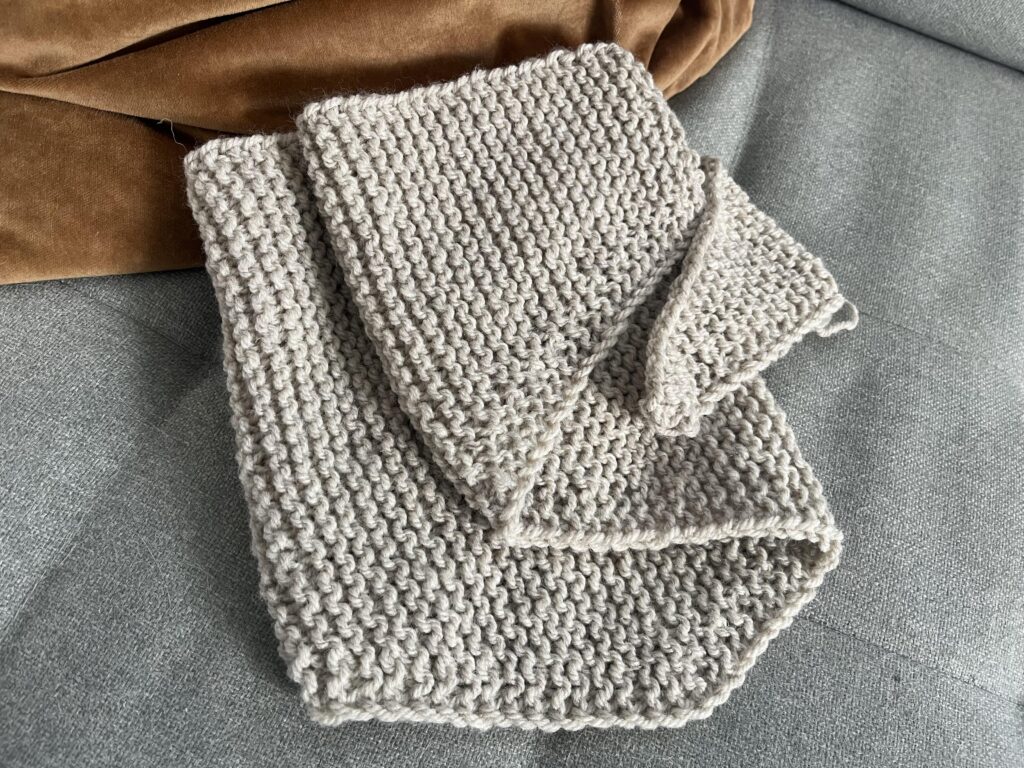
Totally Triangular Scarf by Michelle Krause – this is knit flat, and just requires knit, purl (one purl stitch at the end of the row), kfb, and k2tog, slipping the first stitch, and weaving in ends. It’s made with 100g of worsted weight yarn, and to make it easier (no weighing), you can use two 50g balls. I use my kitchen scale to know when I’ve made it to the center-ish. You could also omit the purls and slip stitches if you aren’t comfortable with those, and it would only change the way the edging looks.
Basic Beginner’s Hat by Maggie Billings – this pattern is knit in the round, and is designed to be a first hat project. However, someone could use the same materials and knit it flat and then seam it – with or without decreases (knitting a rectangle and just cinching at the top, instead of decreases- this requires extra yarn, however).
I have a YouTube playlist of the techniques used, and additional similar item tutorials, here.
These all take smaller amounts of yarn – 100g or less – and could be made in a weekend. You could increase the impact by getting other knitters together for a day or over the course of a few days, either in the same space or separate spaces, and then donate your items as a group.
This weekend, I joined a number of crafters at a local bar Stitch & Bitch, and we all made scarves to be handed out with lunches for folks that are food-insecure. It was a great way to meet like-minded people that want to use their skills and supplies to redistribute resources.
If you’ve looked around and cannot find a place for your goods, look to see if there are community pantries where you could leave a box of items out for folks to rummage through. See if your local soup kitchen or food bank would put out a box of knit accessories. Ask around at a schools schools and see if they take donations for kids and their families. This act of searching will help you get connected to local organizers and mutual-aid groups in your area. This can also be useful if you or someone you know ends up experiencing hardship, too – you will already know where the helpers are.
For me, the framing of these gifts is also important. You may have noticed that I use “mutual-aid” instead of “charity.” Mutual-aid is community care, it is sharing resources with peers – I am closer to being homeless than I am to being in the wealthy owning class. Charity feels like something that is off and away, it is the haves bestowing a fraction of what they have on the have-nots to easy some guilt or to make them feel good about themselves. Mutual-aid says,I see you, you are my community member, and we will look out for each other. It is on-going, it recognizes our shared humanity, and it sustains us.
This act of looking for the helpers, and joining in community care is one of the most buoying things you can do. We are daily bogged down with the harm and the need and being asked to individualize rather than harmonize. We see those at the top continue to enrich themselves rather than paying workers fairly, and use their funds to make a worse world for the majority of us.
The darkness of it all has illuminated the coming together. So, if you are ready to go beyond the red hat as symbol of outrage, and start putting in the work for a better future, it’s perfectly fine to start softly with mutual-aid knits, and learning more about how we got here, so we can move to something better, together.
I encourage you, while you’re knitting, to listen to podcasts and audiobooks by smart and empathetic folks, so you can feel empowered to speak out and be a change-maker. And please do so via your local library with apps like Libby and Hoopla – Audible/Amazon needs no more of your money nor you data.
Take good care of yourself <3